
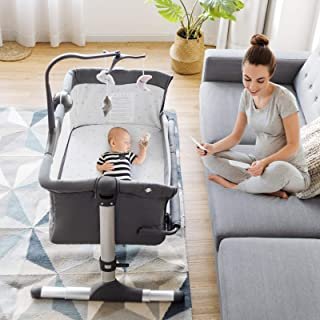
You have probably heard that the CPSC has conducted numerous investigations into the safety of baby cribs. Since 2007, they have issued 46 crib recalls, affecting over eleven million cribs. The recalls were issued for various reasons, including product defects and violations of federal crib regulations. This article will explore the requirements of the new regulations and how these changes will affect child care facilities and small manufacturers. Read on to learn more. In addition, we’ll discuss the impact these new standards have on the safety of new baby wish baby crib.
ASTM F 406-10a requirements
To be a safe crib, the product must meet ASTM F 406-10a requirements. This consumer safety standard establishes the minimum requirements for the structural integrity and performance of a non-full-size crib, including its mesh/fabric assembly, instruction materials, and labeling. The slats, which support the mattress, must be able to support the weight of a 35-pound child without tipping over.
The new standard is based on the most recent version of the federal Consumer Product Safety Commission (CPSC) safety standard. The current ASTM F406 standard incorporates all the requirements outlined in 16 CFR parts 1508 and 1509 but removes the allowance for retightening bolts during testing. The new regulations are more stringent than the previous ones. It is important to note that the new regulations for baby cribs are only effective on June 28, 2011.
As part of these regulations, ASTM International will only accept baby cribs that meet these standards. This voluntary standard was developed by members of the organization, including manufacturers and retailers. The organization will continue to make and publish these standards as they are updated. ASTM has more than 70 members, including manufacturers, retailers, and consumers. However, it is recommended that manufacturers of baby cribs adhere to these standards to ensure safety and reliability.
Compliance date
The CPSC has established a compliance date for baby cribs. Visit this site, If a crib does not meet the standards set forth in this rule, it is a violation of section 19(a)(1) of the Consumer Product Safety Act (CPSA). This rule applies to manufacturers, retailers, and child care facilities. The compliance date of baby cribs should be posted on each crib. This date will be enforced in all states.
If the product has been manufactured after June 2011, it will have a label stating that it complies with the law. Alternatively, if the crib is made from wood, it will have a product identification label on the footboard and headboard. The label will also indicate the compliance date. In many cases, the label will have a year-old manufacturing date. If there is no compliance date listed on a baby crib, it may be outdated.
Impact on small manufacturers
CPSC’s rule to regulate cribs has an unintended consequence for small manufacturers. It is likely to significantly reduce sales, while also creating additional work for manufacturers. This rule also may negatively affect importers, which often sell non-full-size cribs. The Commission’s new rules would have a disproportionate impact on small entities because of their administrative burden. But small manufacturers would be better off adjusting their business practices to account for the new rules.
The global market for baby cribs and cots is expected to grow at a steady rate over the next few years, driven by a booming demand for child care products. In the United States, there will be 3.6 million babies by the end of 2020, and that demand is only expected to grow. And the demand isn’t likely to slow anytime soon. The COVID-19 regulation is expected to largely impact the global market.
Impact on child care facilities
The CPSIA has new standards for baby cribs, and this could have a significant impact on child care facilities. The rule, which was issued last year, requires child care centers and family child care homes to ensure that their baby cribs meet safety standards. The new standards apply to all types of cribs, including cribs that are not yet compliant with the new standards. Child care providers and family child care homes are required to have cribs that meet the standards.
The final rule provides six months for child care centers to comply with the new regulations. This is intended to allow them enough time to purchase and replace compliant cribs. A shorter compliance period would cause greater disruption for child care centers. Still, the rule will allow child care facilities to buy compliant cribs and meet safety standards for the next six months. But even after this extended period, child care facilities must purchase compliant cribs.
Read: How to Find WPS Pin on HP Printer