
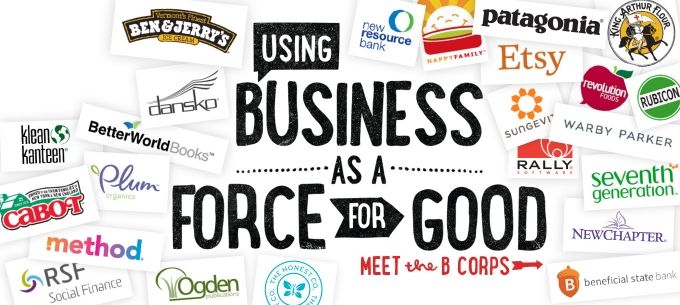
When searching the internet, you might come across the terms B Corps and benefit corporations and wonder what they mean. These are both types of corporations that have a legal obligation to consider their impact on the environment and society beyond just making profits, which means that they aim to have positive social and environmental impacts as well as financial ones.
But how do they differ?
Here’s what you need to know about B Corps v.s. Benefit corporations to decide which one would work best for your business.
What is a B Corp?
B Corporation Certification encourages companies to be more aware of how their actions impact people and the environment. Some benefits for businesses that earn certification include third-party validation, increased customer trust, and access to financial resources. On a corporate level, as a benefit corporation, you can share with investors that your company is doing business in a way that contributes social value alongside profits.
It’s important to note that not all benefit corporations are certified as such—that designation is reserved for those who have met specific criteria for reporting on public benefit performance. The two most notable differences between a certified B Corp and an uncertified one are its transparency about its social performance (through reports) and its legal protection from certain lawsuits like nuisance suits or securities fraud.
What is a Public Benefit Corporation?
A Public Benefit Corporation or PBC refers to a for-profit company with articles of incorporation that include a public benefit clause. It is a state-based form of corporate law that requires boards to consider the impact of their decisions on society. The company must produce specific social goods, such as providing clean drinking water to developing countries, to maintain its status as a PBC. In addition, companies can only create one class of shares to prevent another type of ownership from having more power than others.
Another distinction between PBCs and B Corps is that shareholders are not allowed to sell their shares without approval from the board. Furthermore, corporations must provide reports about how they’re advancing these goals annually to maintain their PBC status.
B Corps v.s. Benefit Corporations: What’s the Difference?
There are a few differences between B corps v.s. Benefit corporations, but here are two that are particularly interesting: B Corps have to have a positive impact on society, whereas this isn’t necessarily true for benefit corporations, and both are required to report on their social impacts annually, but with no requirements for financial transparency. Many people get hung up on whether you can make money as a B Corp, but there is no prohibition on that in the rules – it just means your focus has to be more than just making money.
To receive certification as a benefit corporation, directors must create an explicit Benefit Statement detailing what they hope to achieve through their enterprise. With B Corps, there is no need for this. To be certified as a B Corporation, you must fulfill these four criteria: mission-driven operation, employee ownership or profit sharing; some form of community or environmental responsibility; transparent reporting on progress against public benchmarks.
The True Way Forward, or Virtue-Signaling?
B Corps are for-profit companies that adhere to social responsibility, accountability, and transparency standards. It was introduced in 2008 by Jay Coen Gilbert, the co-founder of Ben & Jerry’s ice cream company. This movement has been praised as a way to get more business ethics into our society. Some corporations prefer to consider themselves benefit corporations. These companies have stricter regulations on social responsibility and fair treatment of their employees, and environmental sustainability as opposed to just focusing on profitability.
Conclusion
B corps and benefit corporations are similar in that they have a strong social or environmental mission. However, there are some major differences. Both certifications require annual reporting, but only benefit corporations have requirements on running your business, including offering a stake to employees. Plus, with benefit corporations, you must make decisions in the best interest of all stakeholders, not just shareholders.
Read more interesting articles at adobetube